

Triest Strategic Solutions is your partner for fractional technology leadership, advice and mentoring.
At Triest Strategic Solutions, we believe meaningful transformation begins with people. Technology, process, and structure all matter, but sustainable change only happens when the humans at the centre are supported, equipped, and empowered.
To guide this work, we use a clear and practical framework: Enable → Support → Transform.
This model ensures organizations build the right foundations, strengthen the right capabilities, and deliver change that lasts.




Enable
Build Strategic Clarity & Capability
Transformation succeeds when organizations start from a place of clarity: clarity about their maturity, their goals, and the capabilities they need to move forward.
In the Enable phase, we work with leaders to understand where the organization is today and co‑design strategies that are grounded, achievable, and aligned to real outcomes. This is where confidence is built, direction is set, and teams begin to see what’s possible.
Service Offerings
Strategic IT Roadmapping & Governance: Creating clear, actionable strategies and governance structures that align technology investments with organizational priorities.
Organizational Design & Leadership Mentorship: Assessing current delivery capabilities, structuring teams for success, and coaching technology leaders to grow into confident, effective executives.
Technology Investment & Budget Optimization: Reviewing IT spend and establishing prioritization frameworks that maximize value and return on investment.
Support
Strengthen Readiness & Build the Conditions for Change
Even the best strategy will fail without the right cultural, structural, and human foundations.
The Support phase focuses on preparing the organization, its people, its processes, and its leadership to adopt new ways of working. This is where capability gaps are closed, confidence is built, and friction is reduced. It is the bridge between planning and delivery.
Service Offerings
Capability Mapping & Skills Development: Identifying strengths and gaps, and equipping teams with the training, tools, and confidence needed before introducing new technology.
Organizational Readiness & Change Coaching: Supporting leaders and staff through change, minimizing disruption, and building a culture that embraces transformation rather than resists it.
Adaptive Workflow & Structural Alignment: Co‑designing flexible, human‑centred workflows and structures that enable collaboration, responsiveness, and long‑term resilience.
Transform
Deliver Sustainable Digital Innovation
Transformation is not just about modernizing systems it’s about enabling new ways of working, improving service delivery, and creating long‑term organizational sustainability.
In the Transform phase, we help organizations modernize safely, adopt new technologies with confidence, and embed governance and practices that ensure change endures long after implementation.
Service Offerings
Legacy System Modernization: Developing phased, low‑risk approaches to retiring technical debt and transitioning to modern platforms without disrupting core operations.
Digital Service Delivery & Customer/Citizen Experience: Shifting from internal IT provisioning to service‑oriented delivery, using human‑centred design to improve digital experiences.
Cloud Adoption & Enterprise Data Strategy: Leading cloud transitions and establishing data governance frameworks that turn fragmented information into enterprise‑wide insight and value.
Fractional
Fractional CIO/CTO
What is a fractional role?
Fractional work is part-time work, typically paid on a monthly retainer or hourly rate, and performed by experts in their field. In many ways fractional roles function in a similar manner to traditional roles, except the work is done on fewer hours per week and it costs less for companies.
Why use fractional roles?
Companies are turning to fractional leaders to run their marketing playbook, own their financial strategy, or manage their HR function (to name a few). These are companies that do not have the need, nor budget, for a full-time role.
Working in partnership with a fractional CIO or CTO allows your organization to benefit from an industry expert, whilst balancing the cost and overhead of a fulltime position. Our experts will support you to ensure your underlying technology, infrastructure, process and team are robust and aligned to fully supporting your strategic goals. We do this by establishing long-term relationships that allows our team to build a strong understanding of you and your organization giving you the flexibility to manage your IT resources in a flexible and adaptable way.
How is fractional different from consultants or freelance arrangements?
Fractional Executives are embedded team members who own outcomes just like a full-time employee would. They build long-term relationships and are fully invested in the companies success. Consultants provide advice, and execute scoped projects using junior talent. They focus on the narrow scope of work defined in the contract rather than Fractional Executives who are able to focus on what the organizations needs to build for overall success.
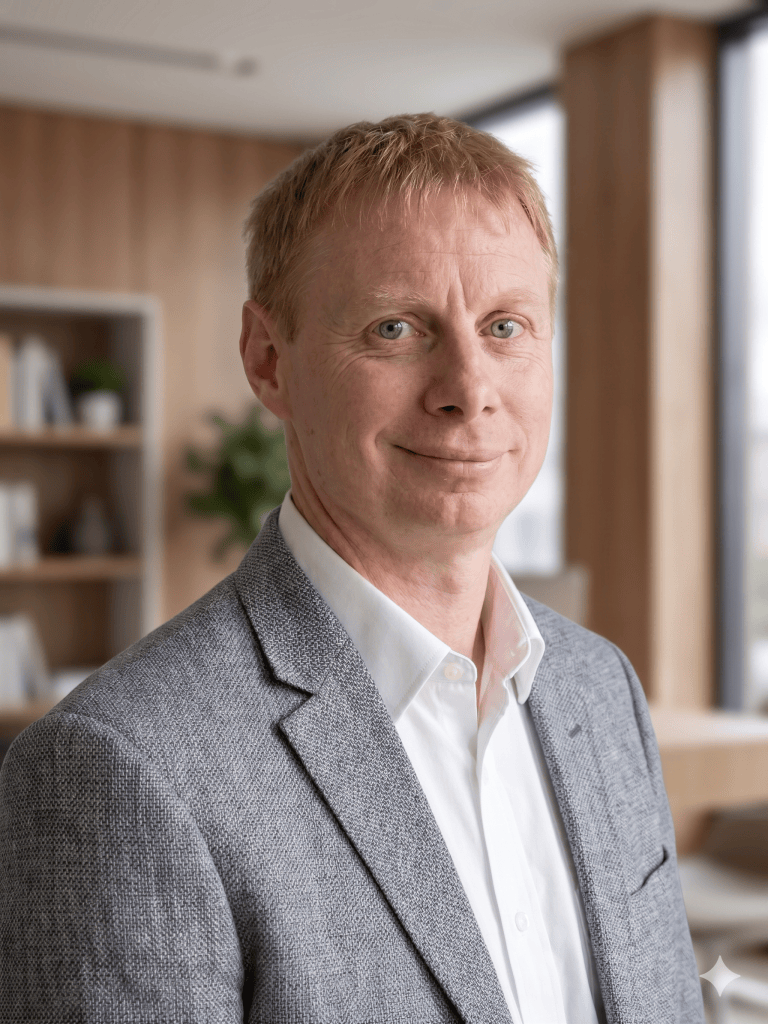
Strategic Digital Transformation. Human-Centric Outcomes.
In a digital landscape defined by rapid change, technology’s true value isn’t found in the tools themselves, but in how effectively they are delivered to the people who use them. I am a strategic IT advisor who bridges the divide between complex technical environments and high-performance, human-centric product delivery. By aligning organizational culture, agile processes, and clear strategic intent, I help teams move beyond the friction of legacy systems to deliver tangible, sustainable results.
With over two decades of experience spanning the public and private sectors across North America and Europe, I have spent my career navigating the tension between legacy infrastructure and the need for modern, agile innovation. At Triest Strategic Solutions, I partner with leadership teams to turn organizational ambiguity into clarity and technological debt into a foundation for growth.
My Perspective
My perspective is rooted in my origins as an engineer, where success relies on precision, functionality, and systemic integrity. This inherent problem-solving mindset has carried forward throughout my career, serving as the foundation for every transformation I lead. Whether I am modernizing payroll systems, negotiating major vendor contracts, or coaching an agile product team, I look for the elegant solution that balances technical rigor with the needs of the user.
I bring a global perspective—informed by a diverse career across two continents—and a practical, evidence-based approach to complex challenges. I am not a consultant who simply observes from the sidelines; I am a practitioner who understands the challenges of implementation because I have lived them.
What I Bring to the Table
My approach to consulting is built on three core pillars:
1. Visionary Strategy & Digital Modernization
Technology should be an enabler of business strategy, not a constraint. I guide organizations through the complex journey of digital transformation from moving core legacy systems to the cloud to adopting modern, agile methodologies. I don’t just implement tools; I help you build the roadmap that aligns your technical environment with your strategic vision.
2. Collaborative Governance & Partnership
True success often lies in the quality of your alliances. My experience in managing multimillion-dollar public/private partnerships has taught me that the best outcomes arise from transparency and shared goals. I specialize in contract governance, vendor management, and negotiation, ensuring that your partnerships serve your mission, protect your interests, and scale with your growth.
3. Culture-First Leadership
Technology transformation is rarely just a technical problem, more often it is a human one. Having mentored diverse teams and led organizations through significant change, I know that sustainable improvement comes from fostering high-performance cultures. I work with leaders to build the internal capacity required to manage change, ensuring that when the project ends, your team remains empowered to succeed.
If you are looking to turn complex challenges into real, practical results, I would love to connect. Let’s start a conversation about your goals and see how I can help, click the button to get in touch.